Leave a Message

Thank you for your message. We will be in touch with you shortly.

What Ski-In/Ski-Out Really Means in Bachelor Gulch

November 27, 2025

Not all ski-in/ski-out is created equal. If you are touring Bachelor Gulch for the first time, it can be hard to tell whether you will truly click in at your door or need to walk, cross a plaza, or use a shuttle. You want the freedom to start and end your day on snow with ease. This guide shows you exactly what ski-in/ski-out can mean in Bachelor Gulch, how to measure it on a tour, and what to verify with the HOA and resort so you buy with confidence. Let’s dive in.

What ski-in/ski-out really means

“Ski-in/ski-out” is a marketing phrase, not a legal standard. Properties can range from a true door-to-trail experience to access that depends on snow, grooming, or even a shuttle. The key is to verify the exact route and how it performs in different parts of the season.

True door-to-trail

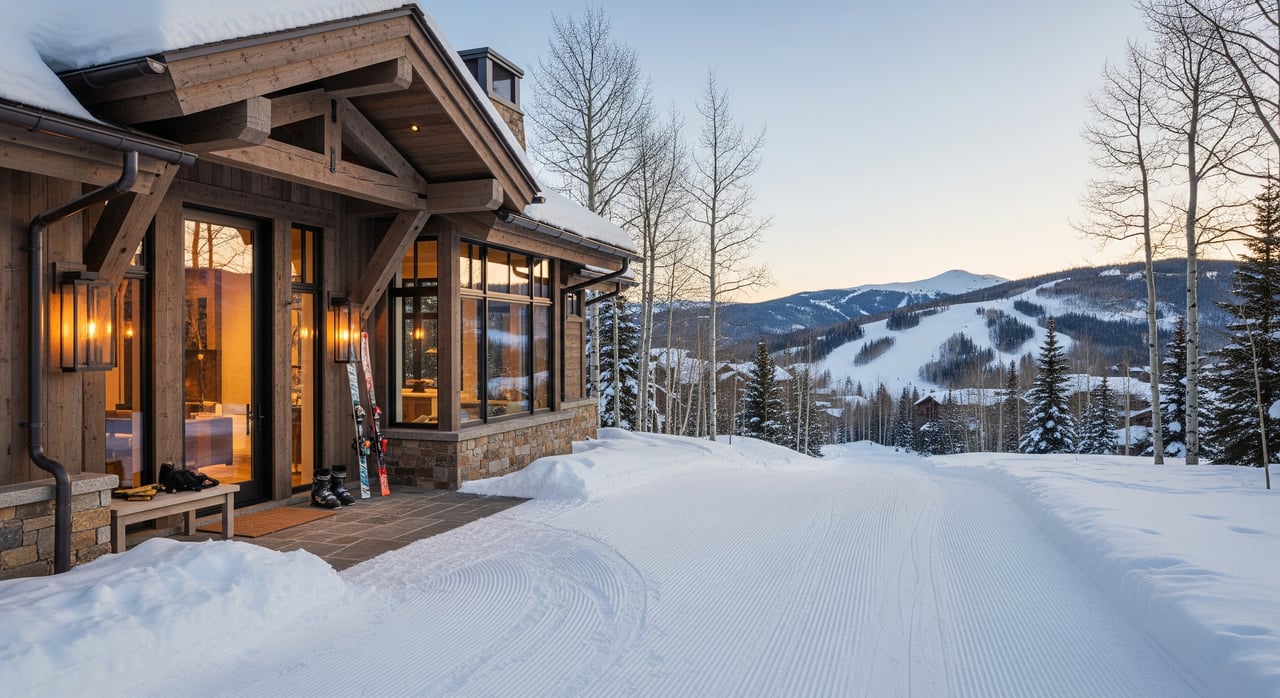
This is the ideal. You step out of the building onto a groomed run or dedicated connector and ski downhill to a lift or village. Return access is also direct, reliable, and clearly marked. This level of access is typically limited to buildings with direct trail frontage.

Near ski access

You may walk a short, groomed path, cross a driveway or plaza, or use a pedestrian bridge before clipping in. The path should be easy to follow and maintained in winter. Many Bachelor Gulch buildings fall into this category, with short connectors that reach the main lift network.

Conditional or shuttle-dependent

Some routes rely on snowmaking or certain grooming schedules. They may be closed during warm spells or late spring. Other properties lean on shuttle or valet systems, which are convenient but are not the same as direct ski frontage. The label can still say ski-in/ski-out, so you need details.

How access works in Bachelor Gulch

Bachelor Gulch sits on the western shoulder of Beaver Creek’s mountain. Beaver Creek Resort manages the lifts, grooming, and mountain operations. Many residences line groomed slopes and connectors that tie you into the broader lift system and nearby villages.

  • Expect a mix of cruisers and connector pistes that link Bachelor Gulch to Beaver Creek Village. Some connections follow a marked path rather than a continuous fall-line run.
  • End-of-day returns may involve traverses near lift unloads, slow zones, or a short crossing of non-ski surfaces like a plaza, depending on the building’s position.
  • Ski bridges, walkways, and tunnels are common and help maintain a continuous route over roads or grade changes.

For context on lifts, grooming, and mountain layout, review Beaver Creek’s official resources on the Beaver Creek Resort site.

Measure what matters on a tour

Distance on a slope can be misleading. Ask for specific, time-based details that reflect real conditions.

Time and elevation

  • Minutes from the unit door to the nearest skiable run and to the closest lift loading point.
  • Separate times for ski out, ski in, and walking while carrying boots and gear.
  • Note elevation change: Do you walk uphill or down to start your day?

Route difficulty and crossings

  • Color rating of the access route (green, blue, black) and whether it is groomed.
  • Any road or plaza crossings, and whether stairs or decks are involved while carrying skis.
  • Whether the route uses only resort-managed trails or crosses private HOA areas.

Seasonal reliability

  • Is the connector supported by snowmaking? If not, how does it hold up during warm periods?
  • Are there known closures during early season or spring?
  • Can you ski back reliably in all typical winter conditions, or is the return conditional?

For a broader sense of how resorts manage terrain, grooming, and operations, Vail Resorts offers background on resort infrastructure at Vail Resorts.

HOA and operations you should check

Behind every smooth ski day is an HOA and a set of shared responsibilities. Understanding who maintains what can prevent surprises.

  • Groomed trails and mountain signage are typically handled by the resort. Private walkways, entrances, bridges, de-icing, and lighting are usually HOA responsibilities.
  • Ask for recent HOA budgets and reserve studies to see snow removal costs and any planned access repairs or upgrades.
  • Review use rules for ski and boot storage, shuttle policies, and guest access.
  • Understand liability: injuries on private walkways generally fall under HOA or owner responsibility, while injuries on resort-managed trails follow resort policies.

For HOA governance and owner rights, consult the Colorado Division of Real Estate and review applicable HOA law such as CCIOA at the Colorado Division of Real Estate.

Microclimate and season timing in Bachelor Gulch

Bachelor Gulch’s western exposure and ridge positions can influence snow. Wind can scourexposed shoulders. Sun can thin coverage on certain aspects sooner in spring. Sheltered, north-facing connectors often hold snow longer.

  • Some key connectors have snowmaking and regular grooming, while secondary links may not. The difference matters in shoulder seasons.
  • Late-season and early-season access can look very different from mid-winter. If spring skiing is your priority, tour during spring conditions.
  • Heavy storms can delay shuttles and create short-term hazards on walkways. Thaw-freeze cycles can make surfaces icy.

For regional weather context and seasonal norms, check the National Weather Service.

Your on-site verification plan

Bring a simple process to every tour so you can compare properties apples to apples.

  1. Walk from the unit door to the nearest skiable trail and to the lift. Time each leg in minutes.
  2. Note every crossing: road, plaza, stairs, bridges, and any uphill sections.
  3. Ask the route’s color rating and whether it is groomed daily.
  4. Ski the return in the afternoon if possible to experience traffic and surface changes.
  5. Confirm who maintains each segment: resort vs. HOA.
  6. Photograph and, if allowed, video each segment for later reference.

If you are new to the area, Beaver Creek’s official resources provide helpful mountain operations context at Beaver Creek Resort.

Buyer checklist for Bachelor Gulch tours

Access specifics

  • Show me the marked route on the resort map and on site.
  • Minutes to the nearest lift in the morning and back in the afternoon.
  • Route difficulty, grooming status, and any road or plaza crossings.

HOA and maintenance

  • Who clears entrances, stairs, and private paths? See schedules and recent invoices.
  • Are ski lockers, boot dryers, or valet services included?
  • Any special assessments planned for access repairs or upgrades?

Operational and legal

  • Are there easements or agreements with the resort for the ski route?
  • Any historical closures or operations issues that interrupted access?
  • Liability and insurance expectations for private access ways.

Lifestyle and logistics

  • Shuttle location and frequency during peak and shoulder seasons.
  • Guest parking capacity and winter plowing protocols.
  • Typical winter drive times from Eagle County Regional Airport; see county resources at Eagle County.

Does ski-in/ski-out boost value?

Often, yes, but quality and reliability of access matter more than the label. Buyers respond to time savings, ease of use, and consistent return routes. Strong HOA health, clear rental rules, and a property’s position within the resort also influence long-term value. Focus on tangible access metrics and documented maintenance, not just marketing language.

For broader safety and industry best practices around mountain operations, see the National Ski Areas Association.

Work with a local advisor

You deserve clear answers and a smooth, data-driven process. A seasoned local advisor can time your tour to the season you plan to use most, measure real access in minutes, and surface HOA details that affect daily life and long-term value. If you want a concierge approach with deep Bachelor Gulch knowledge and access to both visible and discreet opportunities, connect with Tom Dunn. Request a Confidential Valuation or schedule a tour plan tailored to how you actually ski and live.

FAQs

What does “ski-in/ski-out” mean in Bachelor Gulch?

  • It ranges from direct door-to-trail access to routes that require short walks, crossings, or shuttles; verify the exact path, time in minutes, and seasonal reliability.

How can I compare two ski-in/ski-out condos fairly?

  • Time the door-to-lift and afternoon return in minutes, note route difficulty and crossings, and confirm who maintains each segment to compare apples to apples.

Who maintains the trails and connectors I use?

  • Beaver Creek Resort manages lifts, grooming, and mountain trails, while HOAs typically handle private walkways, entrances, de-icing, lighting, and related costs.

Will spring conditions change my access in Bachelor Gulch?

  • Yes; secondary connectors without snowmaking can thin or close in warm periods, so you may walk more or use a shuttle late season compared to mid-winter.

What HOA documents should I request before I buy?

  • Ask for CC&Rs, bylaws, recent financials and reserve study, meeting minutes, access easements with the resort, and any records of assessments for access improvements.

.

EXPLORE SIMILAR BLOG

Real Estate Insights

Work With Us

Setting the highest standard for client satisfaction, Tom and his team not only helps their buyers and sellers achieve their real estate goals but provide them with a rewarding and enjoyable experience that turns many first-time connections into lifelong relationships.