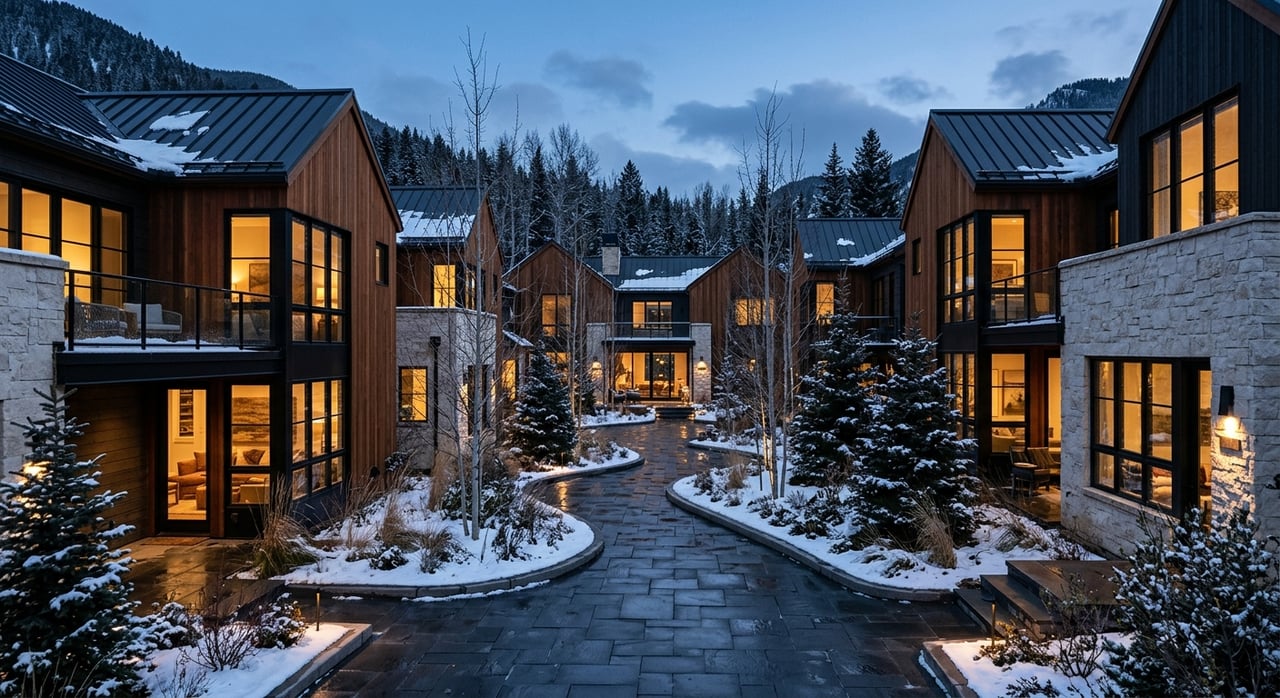
West Vail vs EagleVail Homes: Which Area Fits You?
April 2, 2026
April 2, 2026
If you want a home base near Vail’s ski terrain, the bigger question is not just how close you are to the slopes. It is how you want to live when you are not skiing. Some buyers want quick, simple access into Vail, while others want a more self-contained community with its own trail network and everyday amenities. This guide will help you compare West Vail and EagleVail so you can focus on the setting that best fits your routine, priorities, and long-term ownership goals. Let’s dive in.
West Vail and EagleVail both put you within easy reach of major resort destinations, but they serve different lifestyles. West Vail reads as a more Vail-centric base with strong daily convenience and direct connection to the Town of Vail system.
EagleVail feels more like a stand-alone residential community in the middle valley. It is minutes from Vail, Beaver Creek, and Arrowhead, with its own amenity structure and governance through the EagleVail Metro District.
West Vail is often the simpler choice if your priority is staying closely tied to Vail itself. Town planning materials describe it as the town’s commercial core outside Vail Village and Lionshead, with a significant amount of locals housing and a strong resident focus, according to the West Vail Master Plan.
That matters if you want a neighborhood where day-to-day errands feel easy. West Vail combines residential areas with grocery, restaurant, and retail access, which can make ownership feel more practical year-round.
One of West Vail’s biggest strengths is transportation. The Town of Vail provides free year-round bus service, including West Vail Red, West Vail Green, and West Vail Express routes.
If your ski days center on Vail Village or Lionshead, that setup is hard to ignore. You have a straightforward town-based transit system rather than relying on corridor timing or transfers.
West Vail also stands out for simple daily routines. The town’s Timber Ridge Village project is described as being within walking distance of West Vail grocery stores, restaurants, and retailers.
The same project page notes that Timber Ridge Village is a 100% deed-restricted community with 302 +/- residences, while a 2024 town release cited 294 homes. Even with that variation, the broader point is clear: West Vail remains a major area of focus for year-round resident housing.
If you want paved path access and easy trail connections, West Vail has an edge. The Town of Vail says its recreation path system includes more than 15 miles of paved multi-use paths.
The North Recreation Path connects the Main Vail Roundabout to the West Vail commercial area, and the Gore Valley Trail runs 12 miles and connects west to the Eagle Valley Trail. West Vail bus stops also serve trailheads such as Booth Lake, Bighorn, Buffehr Creek, Pitkin, and Deluge Lake/Gore Creek.
EagleVail tends to attract buyers who want a more residential, recreation-forward setting. Rather than feeling like an extension of a resort town, it offers a community structure with its own amenities, open space, and everyday rhythm.
The official EagleVail community site highlights golf, a pool, pavilion, tennis courts, sports fields, parks, open space, and trails. For many buyers, that broader amenity mix is a big part of the appeal.
EagleVail has about 4,000 residents and is an unincorporated community in Eagle County, governed through its own metro district framework. That can create a different ownership experience than buying inside the Town of Vail.
In practical terms, West Vail is more tied to town planning, redevelopment rules, and deed-restriction policy. EagleVail ownership is shaped more by metro-district governance, homeowner oversight, and community amenity systems.
If your ideal day includes a quick trail outing without heading into the resort core, EagleVail has a compelling profile. The EagleVail trail system includes the 2.5-mile EagleVail Trail, more than 8K of groomed Nordic track, and the Willow Creek Nordic Training Facility with 2.5K of groomed terrain that is open to the public and free of charge.
That makes EagleVail especially appealing if you want recreation integrated into your immediate neighborhood. You can build a daily mountain routine around community-based access rather than a resort-centered one.
For some buyers, the appeal of EagleVail is not just location. It is variety. A community with golf, pool access, trails, parks, and gathering spaces can support a fuller four-season lifestyle.
That can be especially attractive if you are buying a second home and want more than a ski base. It can also matter if members of your household prioritize different activities across the year.
This is where the differences become especially practical. If you are primarily skiing Vail, West Vail is generally the more direct and easier option.
With Town of Vail bus routes serving West Vail year-round, getting into Vail Village or Lionshead is usually more straightforward. That is a major reason many buyers see West Vail as the cleaner Vail-first choice.
EagleVail sits on Core Transit’s Highway 6 route, which connects Vail, Eagle-Vail, Avon, and Edwards fare-free. Core Transit’s winter Vail/Beaver Creek Express runs between Beaver Creek, Avon, and Vail, while EagleVail’s 2025-26 free skier shuttle serves Vail only and does not provide Beaver Creek service this season.
If Beaver Creek is a big part of your plan, EagleVail is still worth considering because of its position along the corridor. But it is important to understand that access may involve route planning, timing, or transfers rather than a single direct neighborhood-to-resort system.
So the short version is simple: West Vail is easier for a Vail-first buyer, while EagleVail may work well for a buyer who likes the corridor location and is comfortable with a more flexible transit approach.
For many buyers, this comparison is not only about lifestyle. It is also about what kind of ownership structure and long-term context feels right.
West Vail is more policy-driven. The town’s housing program materials note that West Vail remains a major focus for deed-restricted housing, and the West Vail overlay district is intended to support single-family, two-family, and multi-family dwellings in transit-connected areas with year-round resident housing.
That does not mean every opportunity in West Vail is the same, but it does mean buyers should pay close attention to use restrictions, redevelopment context, and town policy. In a market like Vail, those details can shape both current use and future flexibility.
EagleVail offers a different framework. Its metro-district model and broader community amenity base can appeal to buyers who want a more neighborhood-centered ownership experience, with its own systems and local oversight.
If you are choosing between these two areas, the right answer often comes down to how you picture an average week.
Both West Vail and EagleVail can work beautifully as a mountain home base, but they deliver different versions of resort living. West Vail is about simplicity, in-town convenience, and a stronger connection to Vail’s transit and daily services. EagleVail is about a more self-contained community experience, broader neighborhood amenities, and recreation woven into everyday life.
If you want help comparing ownership options, transit practicality, and neighborhood fit at a more detailed level, Tom Dunn can help you evaluate the right Vail Valley micro-market with the discretion and local insight that complex resort purchases often require.
.
EXPLORE SIMILAR BLOG
July 9, 2026
July 9, 2026
July 2, 2026
June 25, 2026
June 18, 2026
June 11, 2026
June 4, 2026
May 28, 2026
May 21, 2026
Setting the highest standard for client satisfaction, Tom and his team not only helps their buyers and sellers achieve their real estate goals but provide them with a rewarding and enjoyable experience that turns many first-time connections into lifelong relationships.