Avon and Wildridge Real Estate: Which Area Fits Best?
April 9, 2026
April 9, 2026
Wondering whether Avon or Wildridge is the better place to buy? If you are weighing convenience against elevation, or walkability against bigger views, you are asking the right question. These two settings offer very different ownership experiences, even though they sit within the same Avon market. This guide will help you compare lifestyle, access, home types, and practical tradeoffs so you can buy with more confidence. Let’s dive in.
If you strip the decision down to its core, Avon town center tends to offer convenience and amenity access, while Wildridge tends to offer elevation, views, and a more residential hillside setting. That distinction comes from the town’s own descriptions of each area and how they function day to day.
Avon sits at 7,431 feet above sea level at the base of Beaver Creek Resort. Wildridge rises above the valley on the hillside, and archived planning materials describe subdivision elevations ranging from 7,740 to 8,930 feet. In practical terms, that higher position can mean broader views, more sun exposure, and a noticeably different feel from the valley floor.
For many buyers, Avon’s appeal starts with location and ease. The town center gives you close access to everyday amenities, recreation, and transit. If you want to move through your day with less driving and more flexibility, Avon has a strong case.
According to the town’s Mobility Department, Avon Transit is fare-free and connects residents to the retail and restaurant core, the recreation center, library, Nottingham Park, and Beaver Creek Resort. The town notes that current service includes 30-minute Red and Blue lines, which supports a park-once lifestyle in the core.
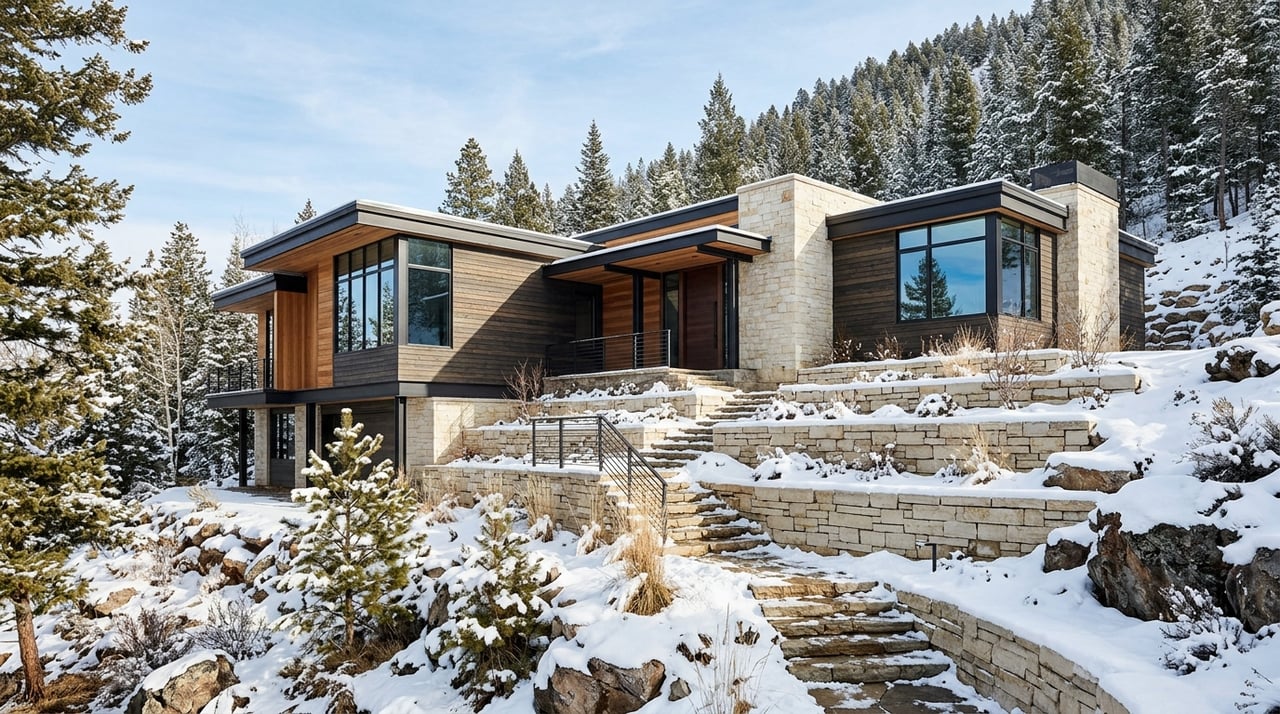
Wildridge sits above the valley with steep topography and open views. The town describes it as perched high above the valley, and that hillside setting is one of its biggest draws. If you value a more elevated vantage point and a quieter residential feel, Wildridge often stands out.
That elevation also affects daily living. A town winter weather advisory notes that more snow is possible at higher elevations and on west-facing slopes, reinforcing that the hillside can experience different conditions than the valley floor. For buyers, that means the view premium can come with added weather awareness in winter and shoulder seasons.
If your ideal mountain lifestyle includes quick access to open space without heading uphill, Avon has a compelling amenity set. Harry A. Nottingham Park includes 48 acres of open space, Nottingham Lake, a beach and swim area, paddle-boating, stand-up paddleboarding, sports courts, picnic areas, and the Avon Pavilion. The town’s Whitewater Park is also just blocks south of the town center on the Eagle River.
This setup can matter if you want easy routines. Morning walks, river access, summer park events, and transit connections all sit close together in the core. For many buyers, that kind of convenience adds real day-to-day value.
Wildridge appeals to buyers who want direct adjacency to open space and hillside trails. The West Avon Preserve, located north of I-70 in Wildridge, offers trails ranging from easy to strenuous. The town describes the preserve as sunny and south-facing, which can shape how the terrain feels across seasons.
At the same time, trail access can be more variable than buyers expect. The town notes seasonal trail closures when snowpack or muddy conditions make routes unsuitable. So while Wildridge can offer immediate access to open space, your shoulder-season use may depend on conditions.
One of Wildridge’s clearest differentiators is lot character. The town says lot sizes there are comparatively larger than in many other Vail Valley neighborhoods, and the area is surrounded by open space with access points to the preserve. For buyers who want more separation between homes, that can be a meaningful advantage.
Town records also note that Wildridge has evolved toward more single-family development over time, alongside duplex and townhome product. That mix helps explain why the neighborhood can feel more residential and less condensed than some valley-floor options.
Avon’s town-core inventory spans a broad range of property types and price points. Current examples cited in the market report include a Benchmark-area condo listed at $735,777, a Riverfront Village condo at $1.895 million, and a Highway 6 townhome at $2.4 million. That variety reflects Avon’s broader mix of condos, townhomes, and higher-end riverfront product.
Wildridge also shows range within its own housing stock. Recent examples include a 3-bedroom condominium at 3050 Wildridge Rd Apt 1 that sold for $1.075 million, a 3-bedroom single-family home at 4015 Wildridge Rd W #E with a Zestimate of $1.5506 million, and a higher-end 3-bedroom single-family listing at 4221 Wildridge Rd W marketed at $2.5 million.
Avon is firmly in a high-price mountain-resort bracket, but the exact number depends on which metric you are looking at. Zillow reports an average home value in Avon of $1,289,017 and a median list price of $2,678,167 as of February 28, 2026. The research also notes that Redfin reported a median sale price of $1.86 million in February 2026, while Realtor.com showed a median home price of $1.32 million in December 2025.
These are different measurements, so the best takeaway is not to fixate on one number. Instead, read them as a range that confirms Avon remains a costly but varied market where product type, location, and setting still matter a great deal.
The 2025 Eagle County Regional Housing Needs Assessment gives helpful context on how prices have shifted over time in up-valley areas such as Avon. For 2023, median sale prices were about $870,000 for condos, $1.15 million for townhomes, $1.11 million for single-family homes, and $1.5 million for duplexes.
The same report says Avon’s non-resort median sale price grew 20.2 percent annually from 2019 to 2023, and Avon’s price per square foot tripled from 2015 to 2023. For buyers comparing Avon core and Wildridge, that history matters because it shows just how much the local price structure has changed in a relatively short period.
If short-term rental income is central to your purchase strategy, Wildridge may not be the right fit. Avon’s official Wildridge subdivision page states that short-term rentals are prohibited in Wildridge. That alone can significantly narrow the buyer pool for this area.
The same town page notes that Wildridge is generally better suited to primary residents or buyers planning long-term use. For some buyers, that is a benefit because it supports a more residential atmosphere. For others, it changes the math entirely.
In Avon’s town core, the rules are different. The town states that short-term rental use requires a zoning and licensing check before a property can be used that way. That means some core properties may fit a second-home strategy better than Wildridge, but you still need property-specific due diligence before you rely on rental assumptions.
Wildridge ownership comes with a few practical details buyers should know early. The town states that the HOA is inactive, the town maintains roads and ditches, and exterior changes require town approval. If you are thinking about exterior updates, that review process should be part of your planning.
This is not necessarily a drawback, but it is part of buying intelligently in the neighborhood. Understanding approval requirements upfront can help you avoid surprises after closing.
Wildridge also has a more pronounced wildfire-management profile than the town core. Avon has said the subdivision can have extreme wildfire risk because of southern exposure, sagebrush vegetation, sloped terrain, and limited ingress and egress. The neighborhood was also recognized as a Firewise community in 2023.
For buyers, the takeaway is practical rather than alarming. The same sun and exposure that can create appealing views also make defensible space and mitigation important ownership responsibilities. If you are considering Wildridge, this should be part of your due diligence and long-term maintenance thinking.
Avon town core tends to fit buyers who value walkability, bus access, and immediate use of park-and-river amenities. If you want easier daily movement between recreation, dining, services, and Beaver Creek access, the core has a very clear advantage.
This can be especially appealing if you want a lower-friction second home, a condo or townhome with strong proximity to amenities, or a property where daily convenience matters as much as the home itself.
Wildridge tends to fit buyers who want bigger lots, more privacy, open-space adjacency, and a hillside setting. It is often a strong match for buyers who are comfortable with winter access considerations, wildfire mitigation responsibilities, and a more residential rhythm.
If your priority is a home that feels more tucked into the hillside with stronger separation and broader outlooks, Wildridge may offer better lifestyle alignment than the town core.
There is no universal winner between Avon and Wildridge. Avon core buys convenience, transit access, and immediate park-and-river amenities. Wildridge buys elevation, views, larger lots, and a more residential hillside feel. The better value depends on what you want your ownership experience to look like.
The smartest purchases in this market usually happen when your lifestyle goals match the micro-location. If you want help comparing specific properties, understanding use restrictions, or identifying the right fit within Avon’s layered market, connect with Tom Dunn for a tailored, concierge-level conversation.
.
EXPLORE SIMILAR BLOG
August 20, 2026
August 13, 2026
August 6, 2026
July 23, 2026
July 16, 2026
July 9, 2026
July 9, 2026
July 2, 2026
June 25, 2026
Setting the highest standard for client satisfaction, Tom and his team not only helps their buyers and sellers achieve their real estate goals but provide them with a rewarding and enjoyable experience that turns many first-time connections into lifelong relationships.